Down the length of Africa. 1949 lecture by my grandmother.
My grandparents, Clinton George Evelyn Dawkins (1882-1966) and Frances Enid Dawkins (1889-1982) made a somewhat hazardous journey down the length of Africa, recounted in this 1949 lecture that she gave on their return, probably to their local Guild of Arts in Essex. My sister Sarah and I discovered her text during our Augean Stables clear-out of our parents’ house this week. Here is a transcript of my grandmother’s handwriting. I downloaded pictures for decoration, but of course they aren't authentic.
Richard
I must begin explaining why we went to Africa last winter. We have three sons in government appointments in three different colonies there, in Uganda, Nyasaland and Sierra Leone. They were all very anxious for us to go out and visit them, so with a tremendous effort we put ourselves out of our usual routine, and decided to go. And to the youngest first in Uganda. No sea passages were available then, so, with a good deal of fear and misgiving as we had never flown before, we booked seats on a Skymaster aeroplane through the travel bureau of Bond’s in Chelmsford.
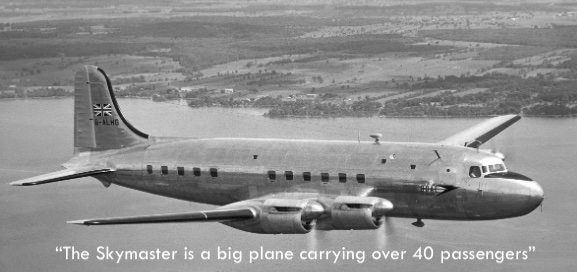
We left London airport – Heathrow – after breakfast on a cold December morning – and by teatime we were sitting under electric fans in Tripoli. The journey was a complete thrill from beginning to end. The Skymaster is a big plane carrying over 40 passengers and the very comfortable seats are arranged in pairs on either side of a central gangway. The stewards and air hostesses are more than attentive, one feels they are personal friends, one is kept plied with cups of coffee or barley-sugar or biscuits, in between the excellent meals that are brought round on individual trays.
We left Tripoli about 7 pm and flew right across the eastern Sahara for hours and hours in the dark towards Khartoum. The immensity of Africa begins to make itself felt when one realises the flight from London to Tripoli – that is across the width of the European continent and the Mediterranean as well – takes no longer than crossing a corner of the Sahara desert. We had an excellent night in the plane, which was very sturdy and most comfortable. Each seat tilts back and is adjustable at any angle, and pillows and rugs are provided. The drone of the engines – not too loud – is a grand soporific, and we slept well when we could drag our eyes away from the stars we seemed to be flying through. Soon after four, we saw the lights of Khartoum below and by five we were having breakfast in a hotel on the banks of the Nile. Shortly after sunrise we were glad to be off again, out of the glare and the dust up into the cool air at 10,000 feet. The Sudan looks most uninviting from that altitude: a khaki landscape blistered with heat, burnt scrub in blackened patches, blown sand sweeping across it all.
But presently the green mountains of Uganda appeared in the distance, and soon we were flying over forest country, fresh and watered, with cultivation here and there near the limpet-like dwellings. Such neat little villages, swept and garnished, with trim hedges, looking as clean and tidy as if they were a tiny scale model of some housing estate. Then we saw the great lake, blue in the distance, and all too soon our first flight was over. We landed at Kisumu in Kenya, 24 hours after leaving England, and said goodbye to the Skymaster. Breakfast in central heated London on Wednesday, lunch on the equator on Thursday! A very simple trouble-free journey, and delightful all the time.

The next day we had another short flight across the lake. This was in a funny little biplane, a Domini, very slow but very handy; biplanes are used a lot in East and Central Africa because they do not require long runways and are very easily handled. The Domini took us across the Victoria Nyanza to Entebbe in Uganda. Flying over a tropical lake dotted with emerald green islands is a most beautiful experience. We flew through a rainstorm and had the incredible thrill of seeing a rainbow right below us, only this rainbow was a complete circle, not merely a bow. From Entebbe, we drove up about 300 miles by car to where our son and his family live.
After being with them about a month, we had to find our way to our eldest son in Nyasaland, and there is no direct way of going at all. So we did a bit by lake steamer, two or three bits by train, another bit by hitchhiking on a lorry and then a long spell (eight days) by African buses across Tanganyika. We had adventures all the time but I’ll tell you of just one. The lorry we hitched on was returning to a cotton factory. It had two seats in the cabin front, where I sat with the English owner driver; my husband had to sit on some very hard wooden cases in the open truck with three Africans behind. The dust on those unmetalled roads is terrific, and sitting under that tropical sun is most trying, so he was not too comfortable. It was a three ton lorry, but it only crawled along. I thought it was on the point of breaking down all the time, as most of the journey had to be done in second gear.
But eventually we struggled over the 120 miles to the hotel which was our destination. Our friend, the owner driver, seemed very anxious to continue his journey back to the factory without delay for, he now explained, “I have a rather valuable load up and want to get in before dark. Your husband has been sitting on £14,000 worth of silver coins!” No wonder it was hard! And it was the weight of that money that made the lorry so slow. Incidentally it was going to be used for paying the natives for the cotton they supplied to his factory.
Eventually we came to an end of this long journey, ending up as a little place called Mbeya in Tanganyika, and there we were stuck! It was now the rainy season, and the motor road that could’ve taken us the 400 odd miles to our son in Nyasaland was no longer open; the road bridges had been washed away by swollen rivers. But there is a small airfield at Mbeya, and on it there happened to be a little charter aeroplane that had to wait there for two or three days. As there is also an airfield at the place we wanted to go to (Lilongwe) we thought it would be a good idea to fly there – indeed there seemed no other way. We asked the pilot if he would take us and he said he had never been in that part of Africa before. And of course he had no wireless on his plane or anything so modern, but he was quite willing to take us if we liked. So next morning we started off in the little Gemini – still smaller biplane – my husband and the pilot in front and our luggage stacked up on the seat behind with myself tucked in amongst it: there wasn’t an inch to spare. No air hostess or barley-sugar this time! Only a tiny little flimsy machine flying over wildest Africa. As this flight was not on his regular schedule, the pilot had no charts of the route – only a rather inadequate borrowed map. He crawled along over the most fearsome country: mountains and forests, cliffs and roaring torrents, rocks and precipices, all twisted and tortured into a really terrifying landscape. No possibility of a forced landing there – and if there had been, the local inhabitants of that territory are mostly man-eating lions! So on we flew, hopefully, with more mountains rearing up in front. These suddenly became obscured with cloud. The cloud gathered and grew till it blotted out all the Earth, black and angry-looking with lightning darting through it. The little Gemini turned aside to try to get round the storm – these small planes have no power to stand up to bad weather – but after 20 minutes of this evading action, the pilot said he couldn’t go much further as he hadn’t enough petrol, and we had better go back to Mbeya. So round we went, turning our backs on that inhospitable storm, and landed where we had set out from that morning – rather thankful I may say to feel solid ground again! But we’d had two very exciting hours flying, all for nothing and the pilot said we could try again the next day to get to Lilongwe.
So the next day we started off at dawn to try to get ahead of the daily storms. We passed that mountain range safely. But central Africa is all mountains. There are too many of them, and they are too confused to be of any use as flying landmarks. Roads are the best guides: there are so few roads in Tanganyika and Nyasaland that if you see a straight red streak below you can be fairly sure where you are. IF YOU CAN SEE IT. But those wretched clouds came up again – not a storm this time, just cold wet fog that blotted out earth and sky. The compass took us straight on, but how about wind drift? And those mountains, now invisible where were they?
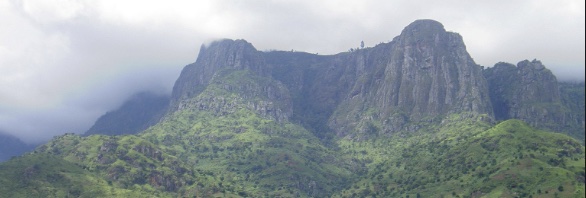
After about a quarter of an hour the pilot said it was impossible to go on without being able to see, and he was going to dive to try to get underneath the clouds. So down we plunged, and down and down. I gripped my seat and shut my eyes and wondered why had ever come to Africa! Then suddenly the fog had gone, and we were rushing full tilt into a green mountain dotted with trees. I said my prayers this time – but the Gemini levelled out and the green mountain levelled out too and turned into a flat and smiling plain, which we had seen at a tilt as we spiralled out of the clouds! So there we were, in clear air – it seemed like a miracle, and our view stretched across 100 miles of Africa. Then we had to find out where we were after all that blind flying – and soon the red road pointed the way. In another hour or so we spotted the little town of Lilongwe hiding under its trees, near the tiny aerodrome. We circled over our son’s house, and saw our small grandson waving to us from their garden! They had expected us the previous day and were rather anxious on our behalf, but all’s well that ends well.
We stayed a month in Nyasaland, which is a very beautiful country with most charming people living in it. Then we travelled southwards by much more orthodox means. We had two more flights to get into Rhodesia by the ordinary weekly service of yet another variety of biplane called a Rapide. Roads and railways are so few and so circuitous in central Africa that everyone there has become very air-minded. For instance when my grandson, aged 7, goes back to his boarding school, he and five other small boys are bundled into the “school plane” and sail away all by themselves for a three hour flight with only the pilot to look after them, and his machine and navigation as well.
Then we had a long rail journey – nearly 3000 miles, which took altogether four days and four nights visiting the Victoria Falls on the way – right across southern Rhodesia, Bechuanaland, and the whole length of the union, to Cape Town, and we were in civilisation once again.
We came back by steamer, and we passed tantalisingly near Sierra Leone – but alas did not stop, so we were not able to visit our other son. We hope to do that in the dim future!